Explore artifact lineage graphs ↗
noOriginal Documentation
Documentation Index#
Fetch the complete documentation index at: https://docs.wandb.ai/llms.txt Use this file to discover all available pages before exploring further.
Traverse direct acyclic W&B Artifact graphs.
W&B tracks the inputs and outputs of runs using directed acyclic graphs (DAGs) called lineage graphs. Lineage graphs are visual representations of the relationships between artifacts and runs in an ML experiment. They show how data and models flow through different stages of the ML lifecycle, from raw data ingestion to model training and evaluation.
Tracking artifact lineage provides several key advantages:
- Reproducibility: Enables teams to reproduce experiments, models, and results for debugging, experimentation, and validation.
- Version control: Tracks changes to artifacts over time, allowing teams to revert to previous data or model versions when needed.
- Auditing: Maintains a detailed record of artifacts and transformations to support compliance and governance.
- Collaboration: Helps to improve teamwork by making experiment history transparent, reducing duplicated effort, and accelerating development.
View an artifact’s lineage graph#
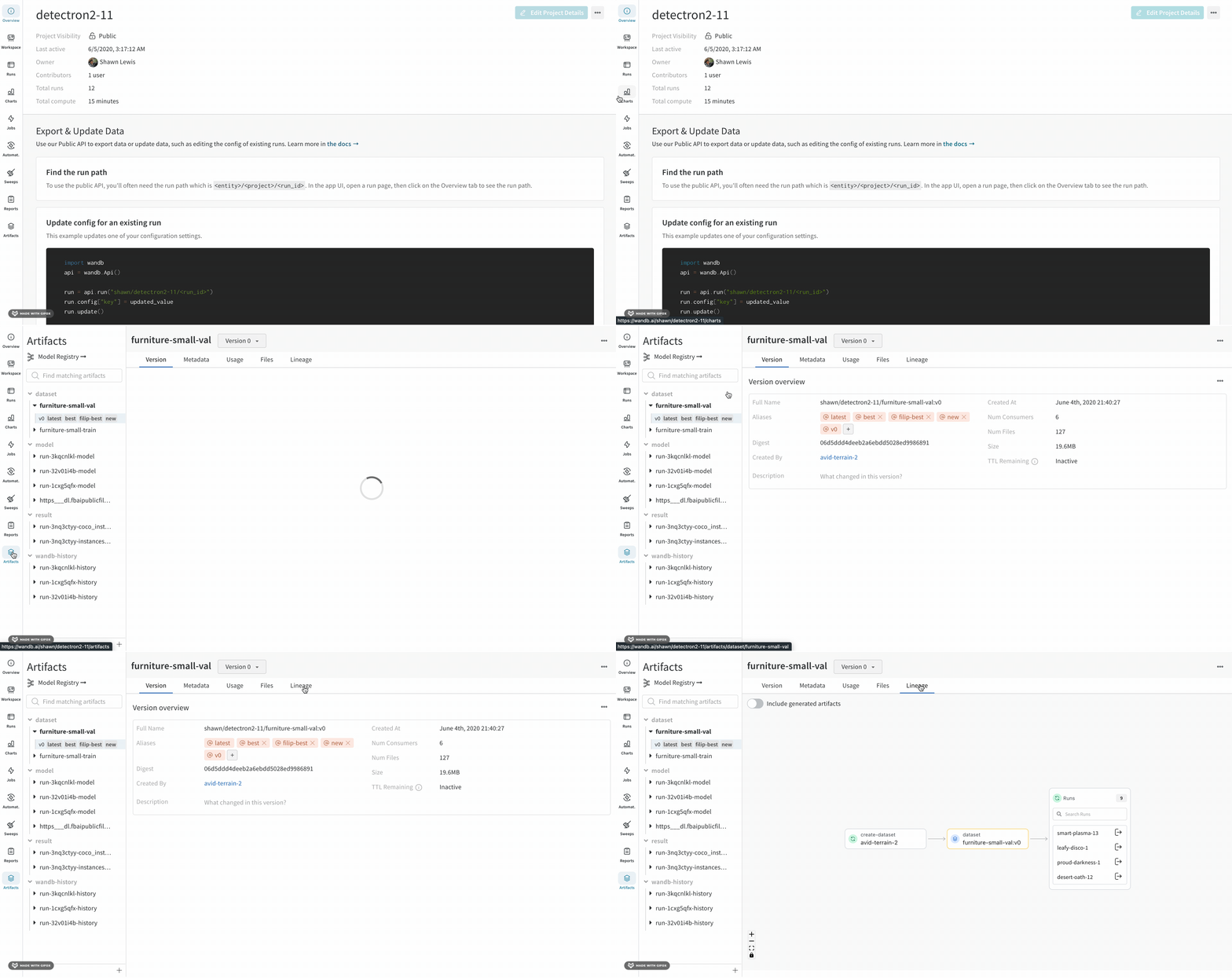
To view an artifact’s lineage graph:
- Navigate to the W&B App.
- Select the project that contains the run or artifact you want to explore.
- Click on the Artifacts tab in the project sidebar.
- Select the Lineage tab.
Enable lineage graph tracking#
To enable lineage graph tracking, you need to mark artifacts as inputs or outputs of a run using the W&B Python SDK.
Track the input of a run#
Mark an artifact as the input (or dependency) of a run with the wandb.Run.use_artifact()
method. Specify the name of the artifact and an optional alias to reference a specific version of that artifact. The name of the
artifact is in the format <artifact_name>:<version> or <artifact_name>:<alias>.
Replace values enclosed in angle brackets (< >) with your values:
import wandb

# Initialize a run
with wandb.init(entity="<entity>", project="<project>") as run:
  # Get artifact, mark it as a dependency
  artifact = run.use_artifact(artifact_or_name="<name>", aliases="<alias>")
Track the output of a run#
Use wandb.Run.log_artifact() to declare an artifact as an output of a run. First,
create an artifact with the wandb.Artifact() constructor. Then, log the
artifact as an output of the run with wandb.Run.log_artifact().
Replace values enclosed in angle brackets (< >) with your values:
import wandb

# Initialize a run
with wandb.init(entity="<entity>", project="<project>") as run:

  # Create an artifact
  artifact = wandb.Artifact(name = "<artifact_name>", type = "<artifact_type>")
  artifact.add_file(local_path = "<local_filepath>", name="<optional-name>")

  # Log the artifact as an output of the run
  run.log_artifact(artifact_or_path = artifact)
Navigate lineage graphs#
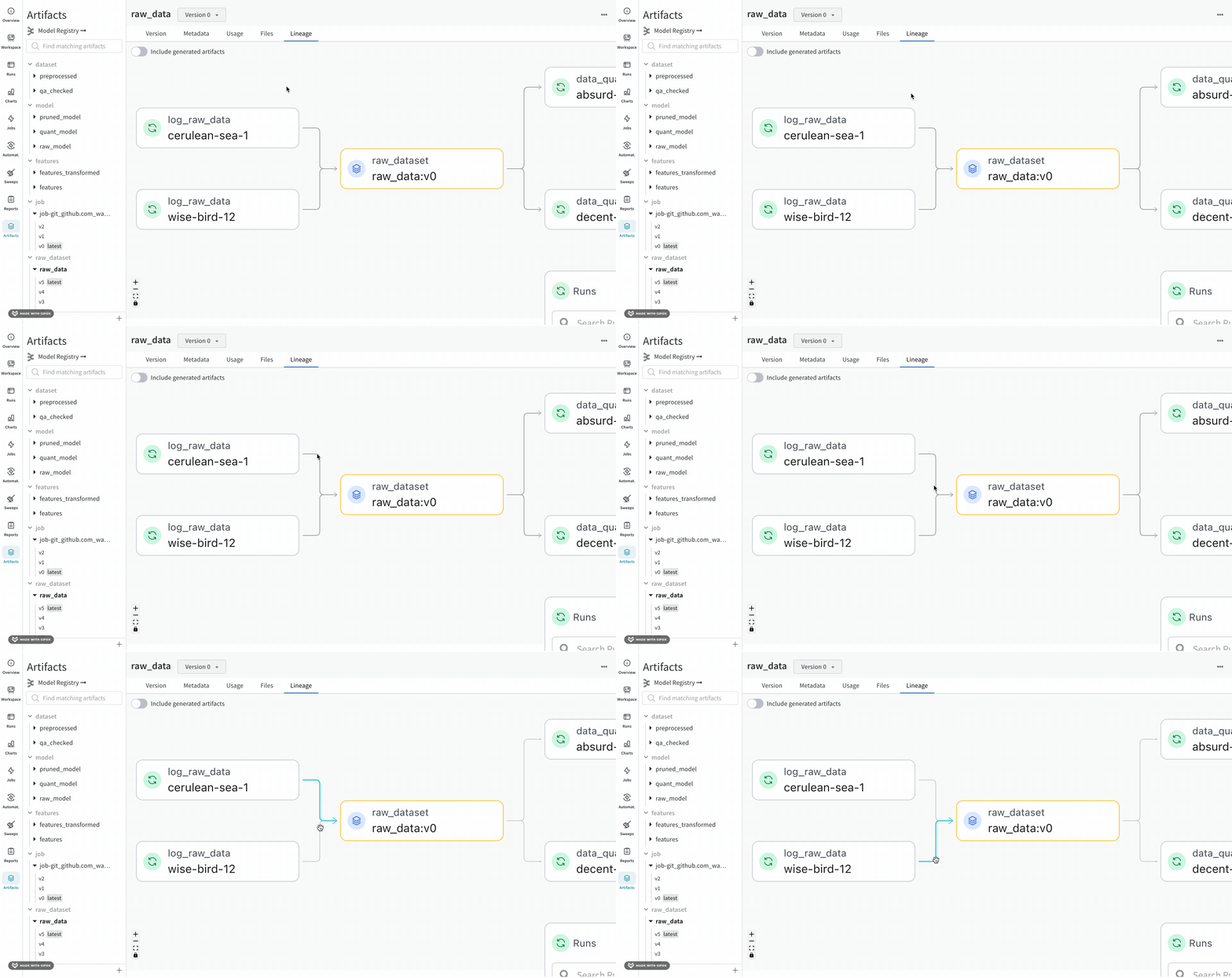
The artifact or job type you provide appears in front of its name, with artifacts represented by blue icons and runs represented by green icons. Arrows detail the input and output of a run or artifact on the graph.
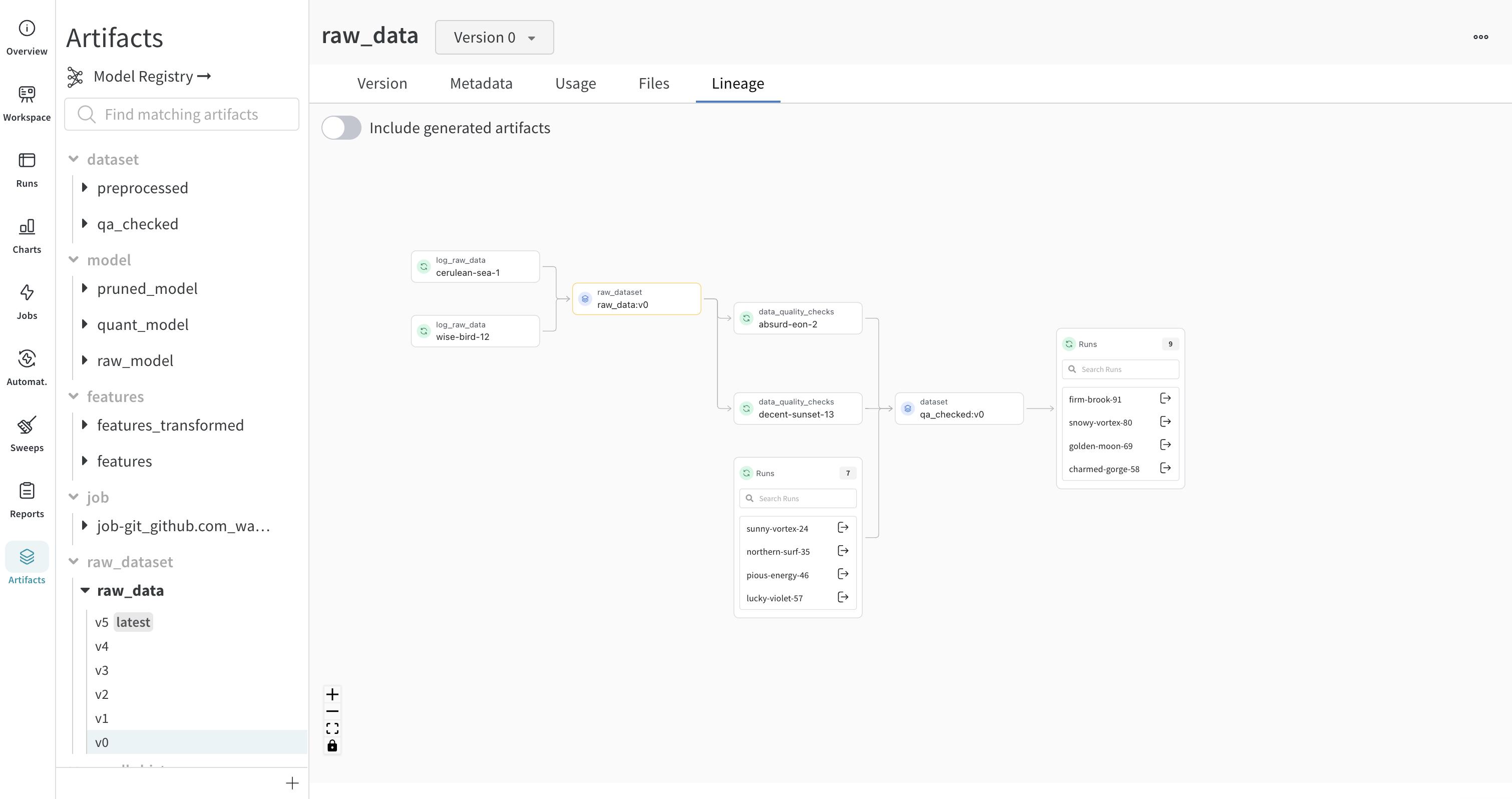
You can view the type and the name of artifact in both the left sidebar and in the Lineage tab.
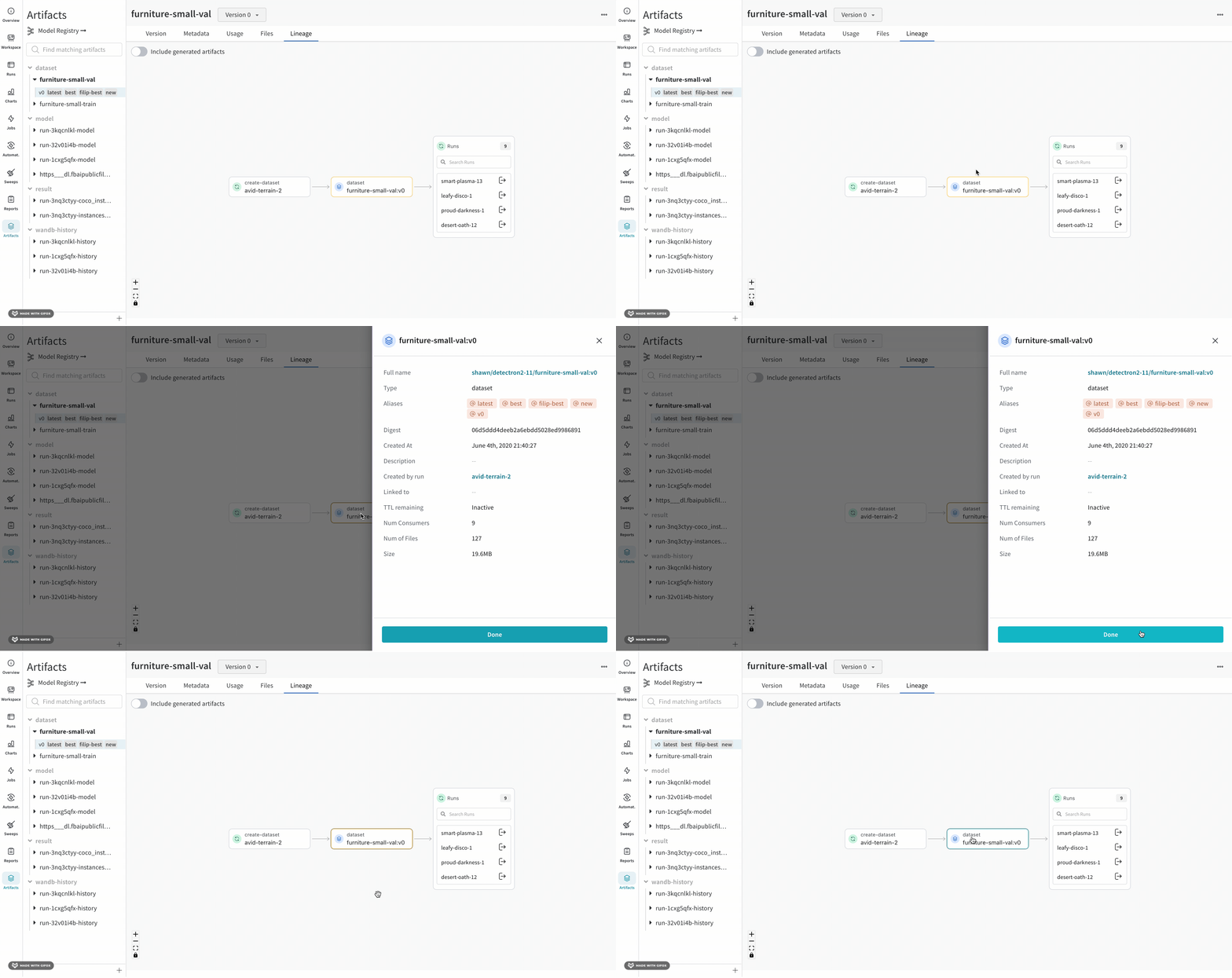
For a more detailed view, click any individual artifact or run to get more information on a particular object.
Artifact clusters#
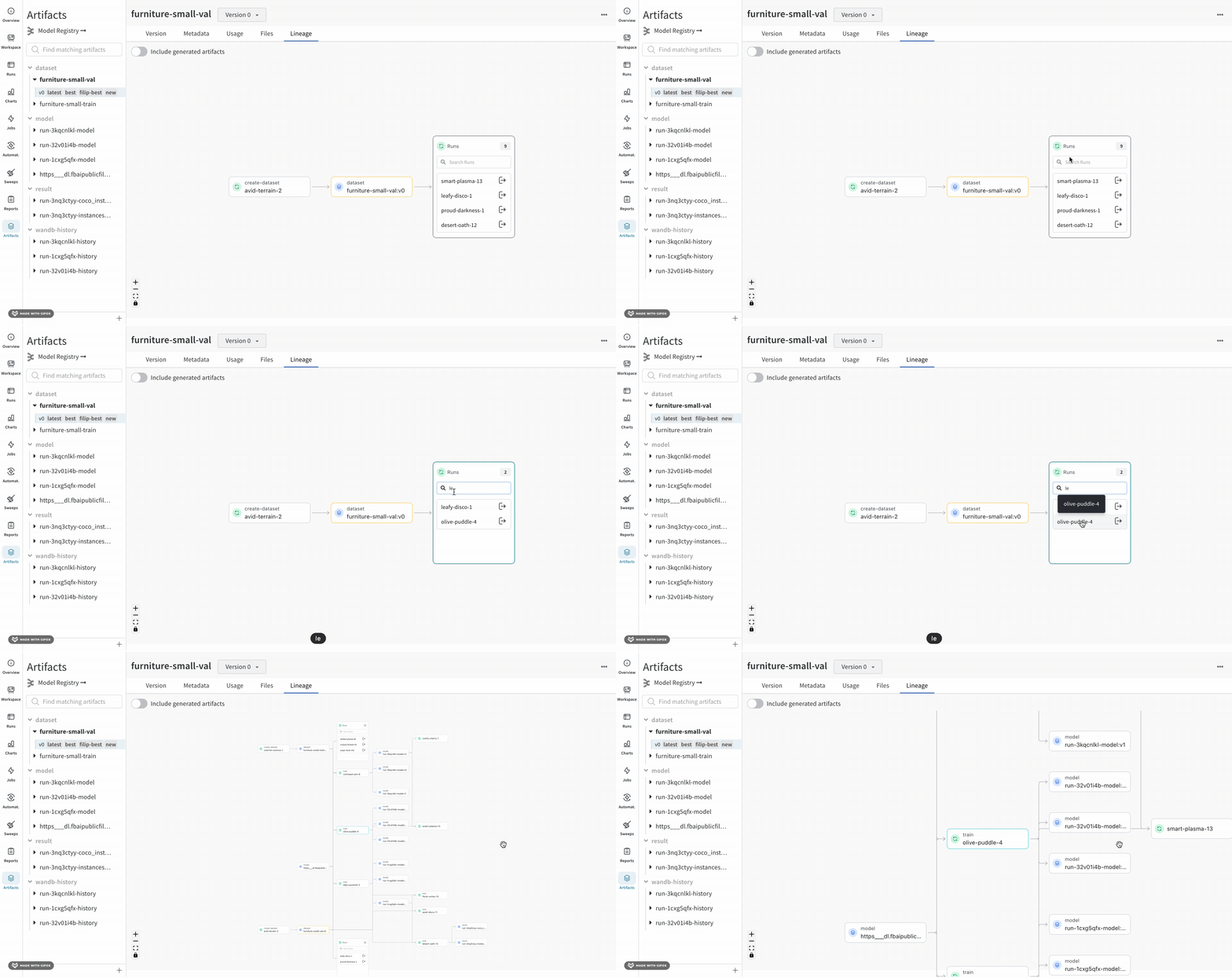
When a level of the graph has five or more runs or artifacts, it creates a cluster. A cluster has a search bar to find specific versions of runs or artifacts and pulls an individual node from a cluster to continue investigating the lineage of a node inside a cluster.
Clicking on a node opens a preview with an overview of the node. Clicking on the arrow extracts the individual run or artifact so you can examine the lineage of the extracted node.
Navigate an artifact graph programmatically#
Programmatically navigate a graph using the W&B Python SDK. Use an artifact object’s
logged_by() and used_by() methods to walk the graph:
with wandb.init() as run:
    artifact = run.use_artifact("artifact_name:latest")

    # Walk up and down the graph from an artifact:
    producer_run = artifact.logged_by()
    consumer_runs = artifact.used_by()